


Faye in the Arctic

Over the last few weeks, we have been following Faye Parker as she works on sea ice research in Cambridge Bay and Qikiqtarjuaq. She has been collecting ice cores, analysing ocean samples, and helping us better understand how polar environments influence our global climate.
From drilling through metres of sea ice to processing samples late into the evening, this series gives a behind-the-scenes look at fieldwork in one of the most extreme and fascinating environments on Earth.
Along the way, Faye has been sharing what motivates her research, what daily life in the Arctic is really like, and why studying sea ice matters for our planet’s future. CCR is incredibly proud to have her as part of our team.
What’s inside an ice core?
Faye told us that drilling ice cores is one of the most important parts of her work — and that every single core contains a record of environmental history.
She explained that as soon as a core is extracted, she measures its temperature every 5 cm to build a full temperature profile. Later, back at the research centre, she cuts the cores into sections, melts them, and analyses them for salinity and nutrients.
She also mentioned that some cores are preserved using iodine so plankton living inside the ice can be identified later. Others are filtered to measure chlorophyll and nutrients such as nitrate, phosphate, and silica.
She said that although sea ice looks lifeless from the surface, it’s actually full of microscopic life.
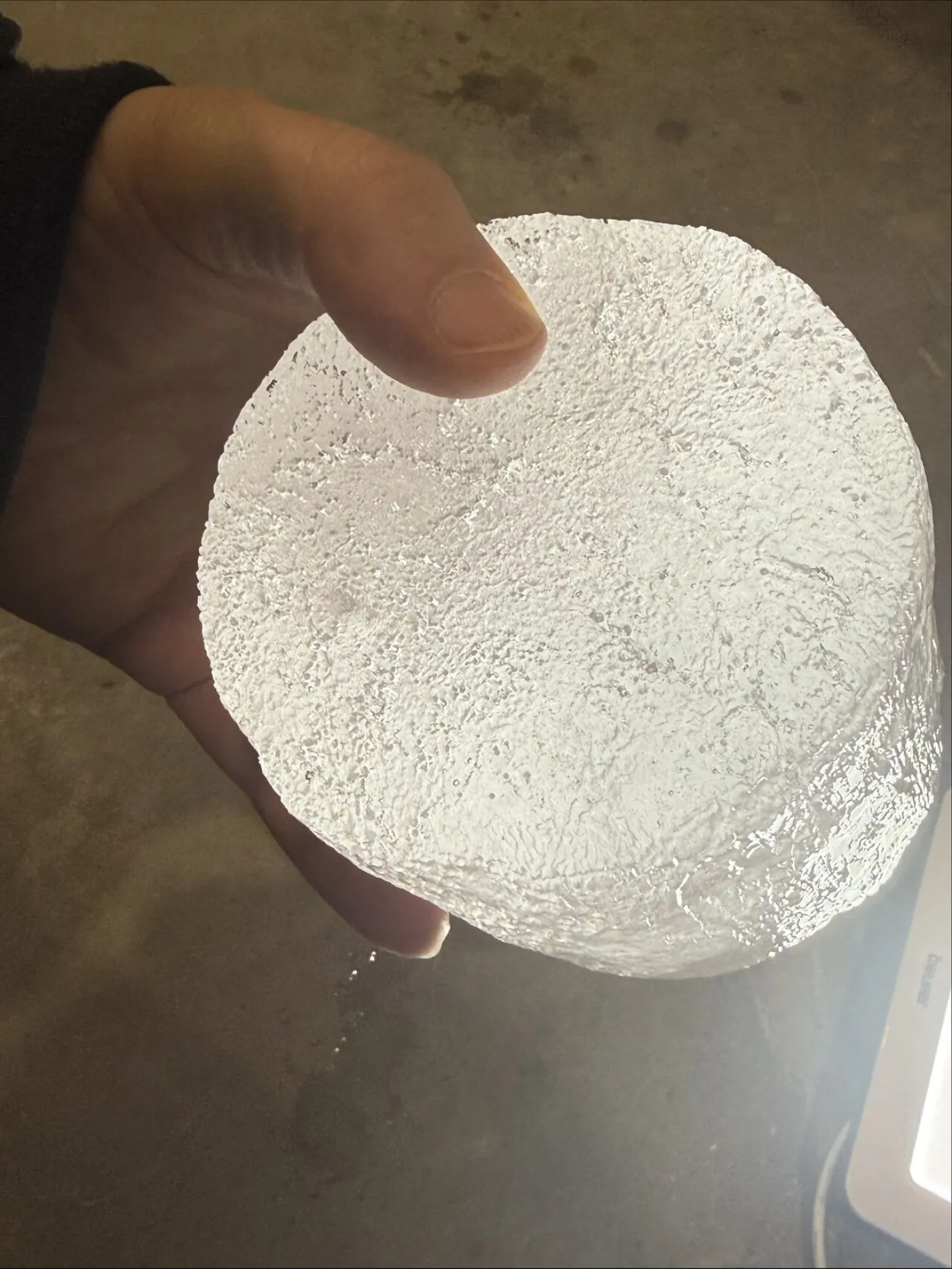
End of an ice core
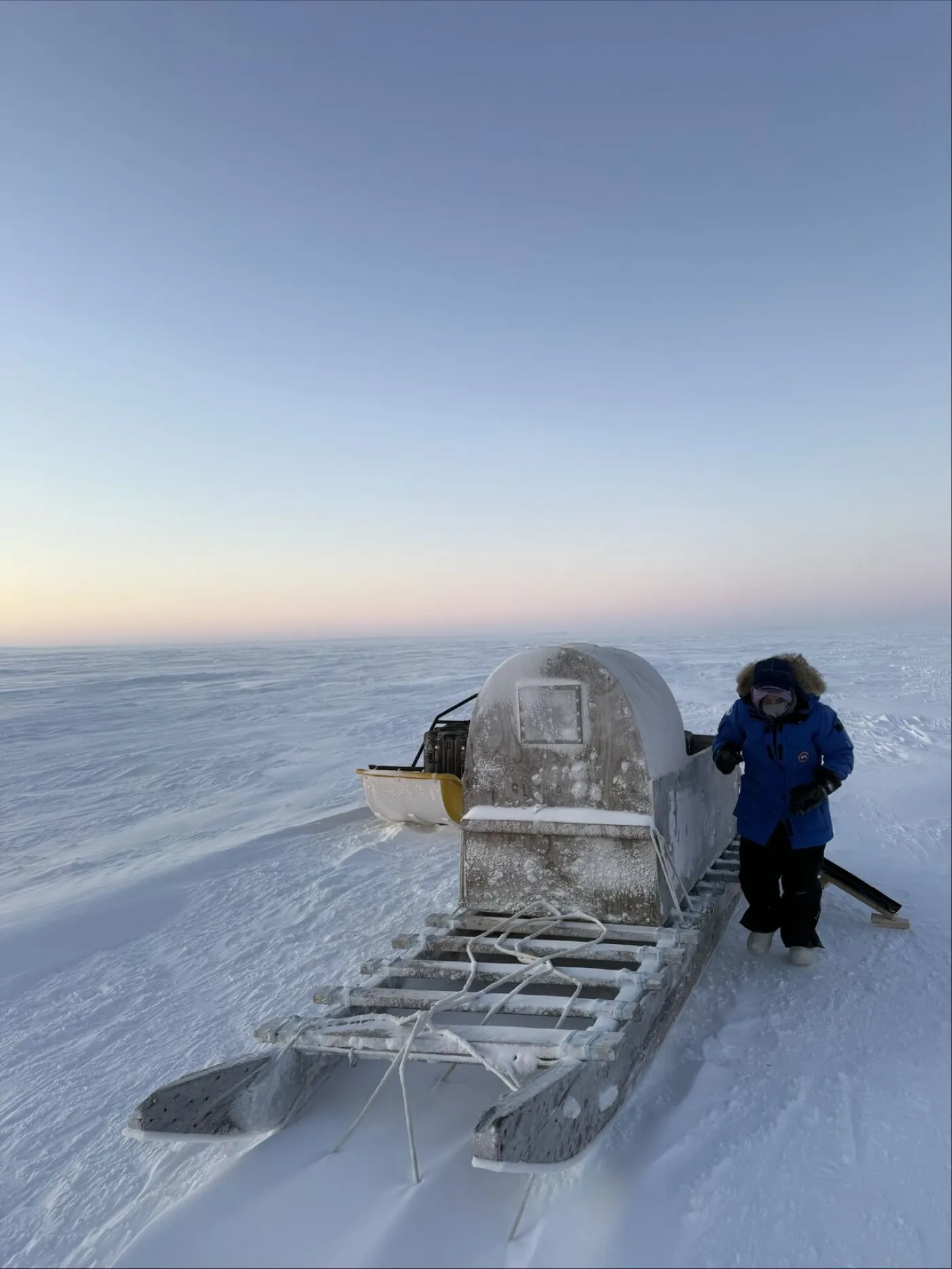
Transport on the ice
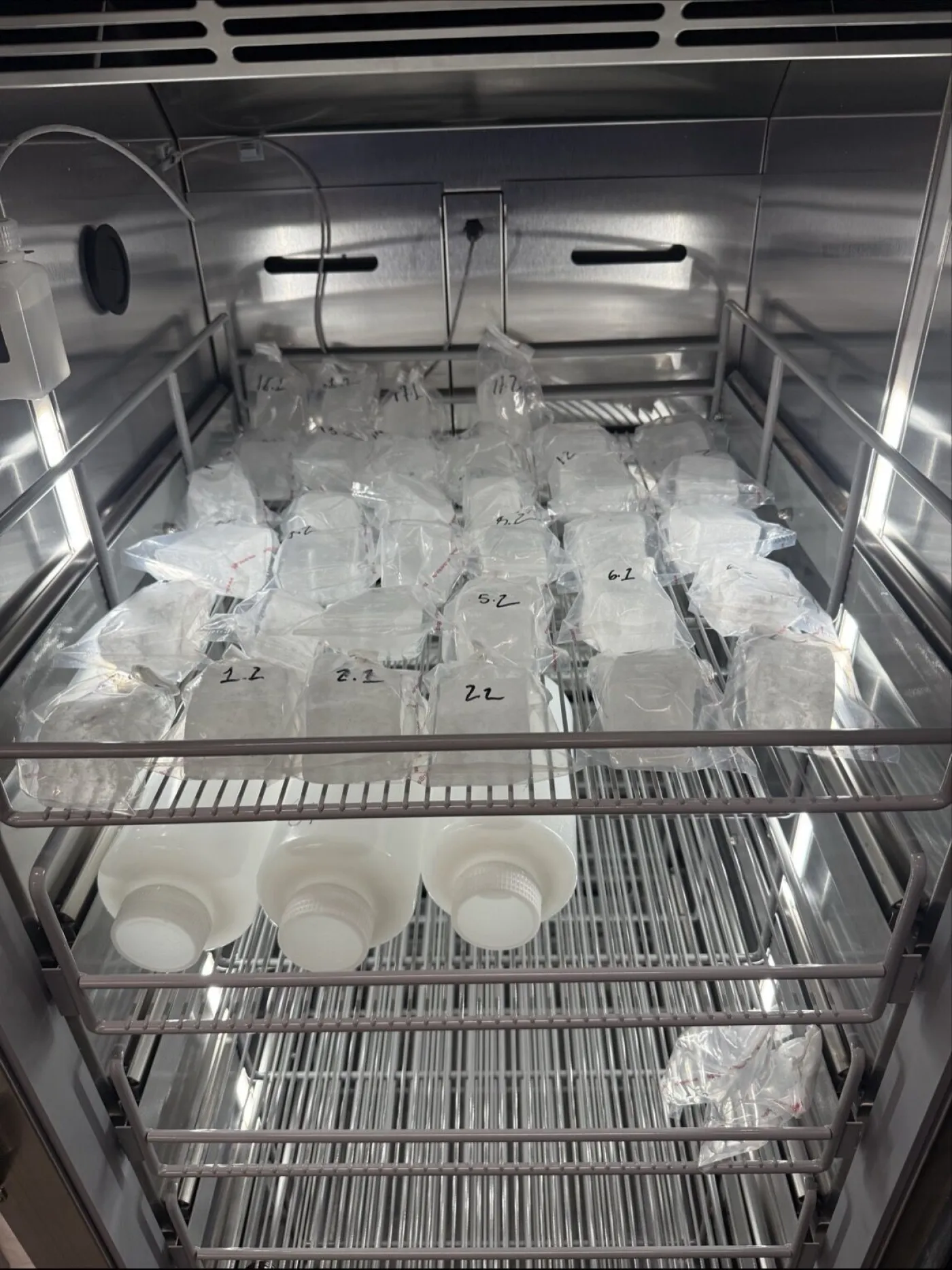
Samples in the freezer
Why this research matters
Faye's PhD research focuses on nutrient cycling and primary production in the Arctic Ocean, particularly how sea ice influences these processes.
She told us that sea ice plays a surprisingly important role in the carbon cycle. It supports ecosystems throughout winter and interacts with the ocean during the spring melt, helping regulate how carbon and nutrients move through the environment.
Understanding these processes helps scientists predict how Arctic ecosystems and even global climate systems, may change in the future.
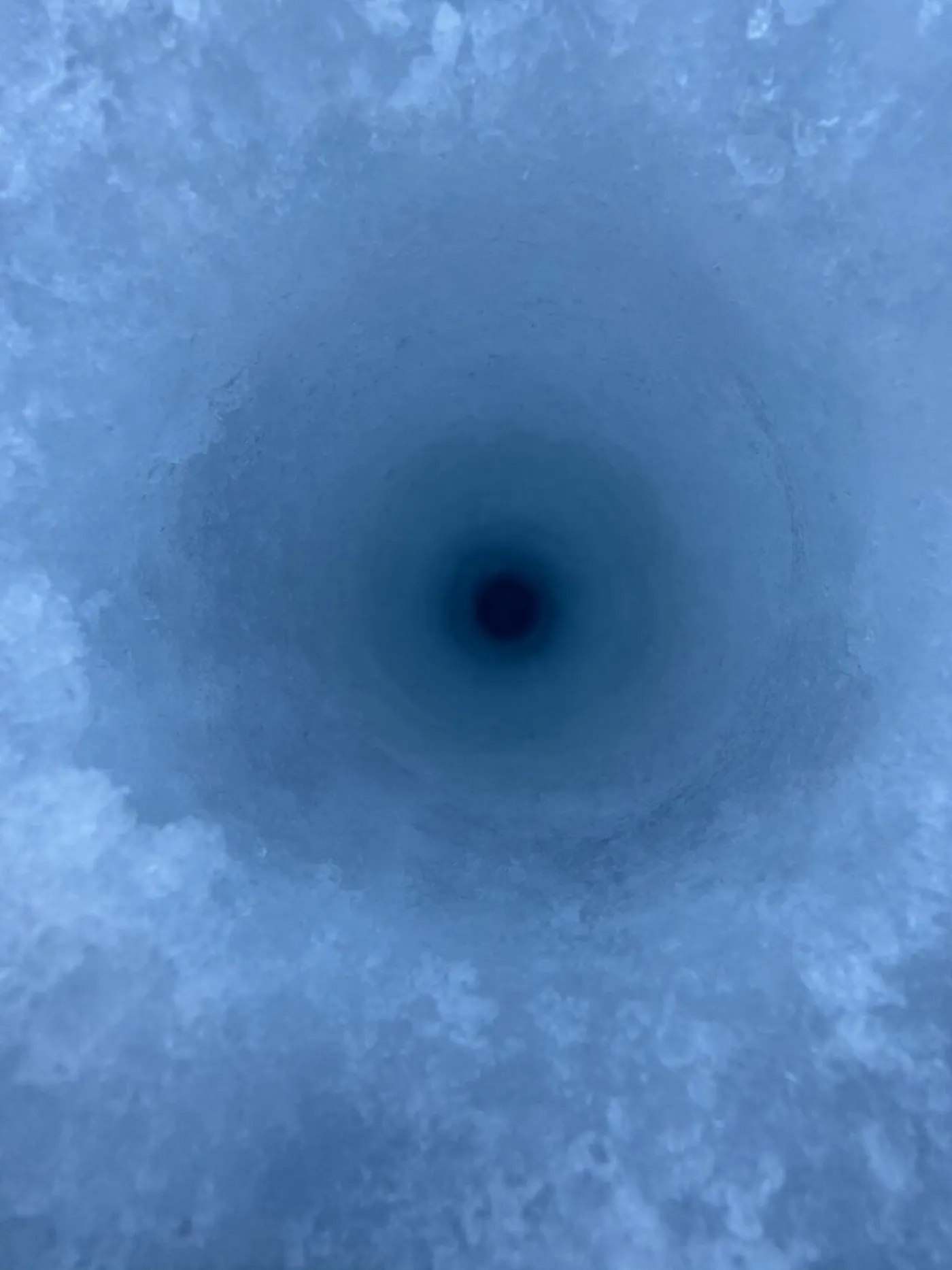
Hole drilled in the ice
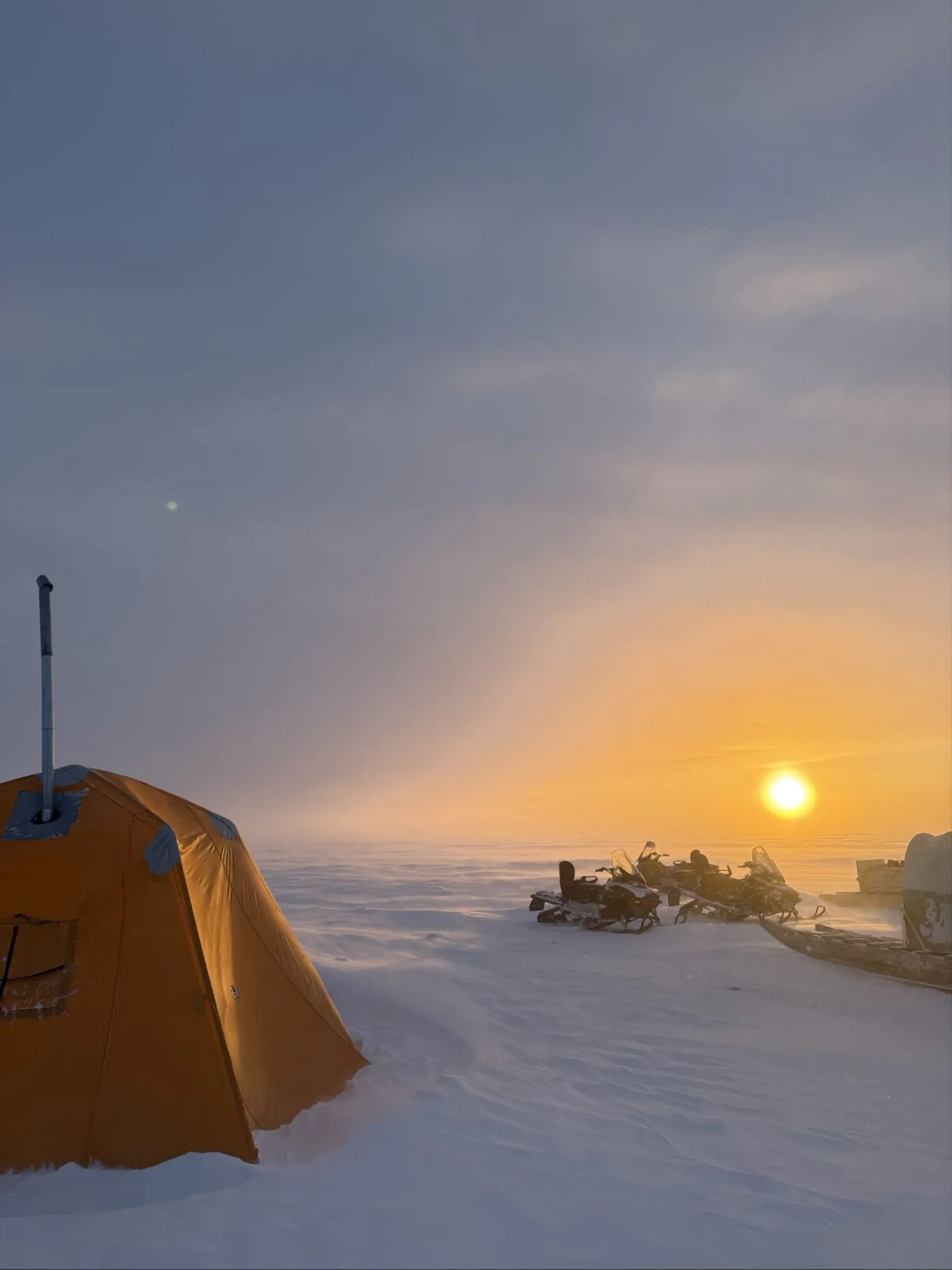
Tent on the ice
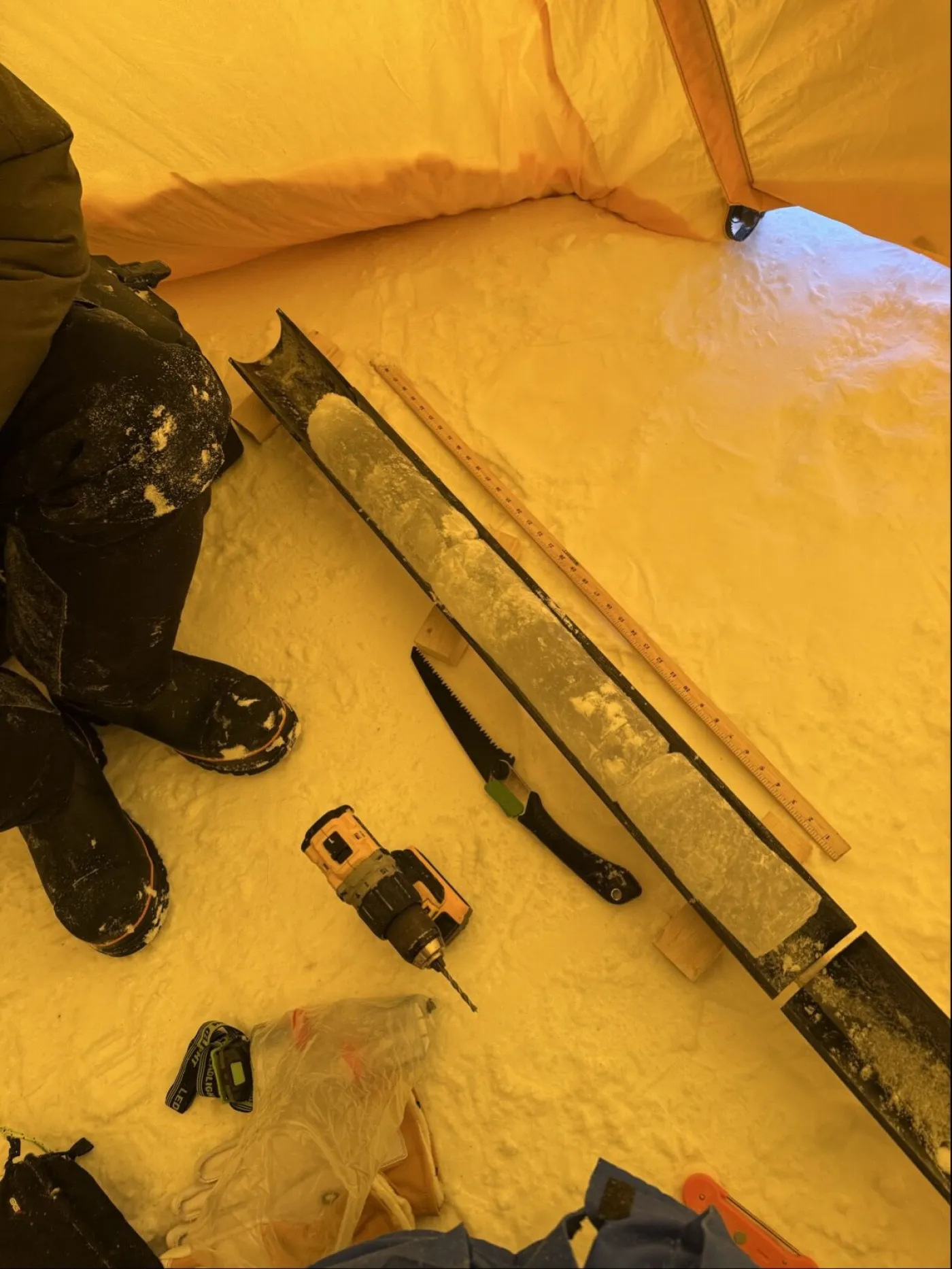
Equipment in the tent
A typical field day
Faye described her field days as early starts, usually just before 7am, requiring plenty of warm layers.
After breakfast, the team prepares equipment, meets local guides, and loads everything onto qamutiiks (traditional sleds). From there, they travel by snowmobile to their field site, which usually takes around 20–30 minutes across the ice.
Once on site, they unpack equipment, drill ice cores, collect water samples beneath the ice, and record environmental measurements. Lunch is usually around 1pm, and they head back around 3pm, just after sunset, although she mentioned it still remains surprisingly bright.
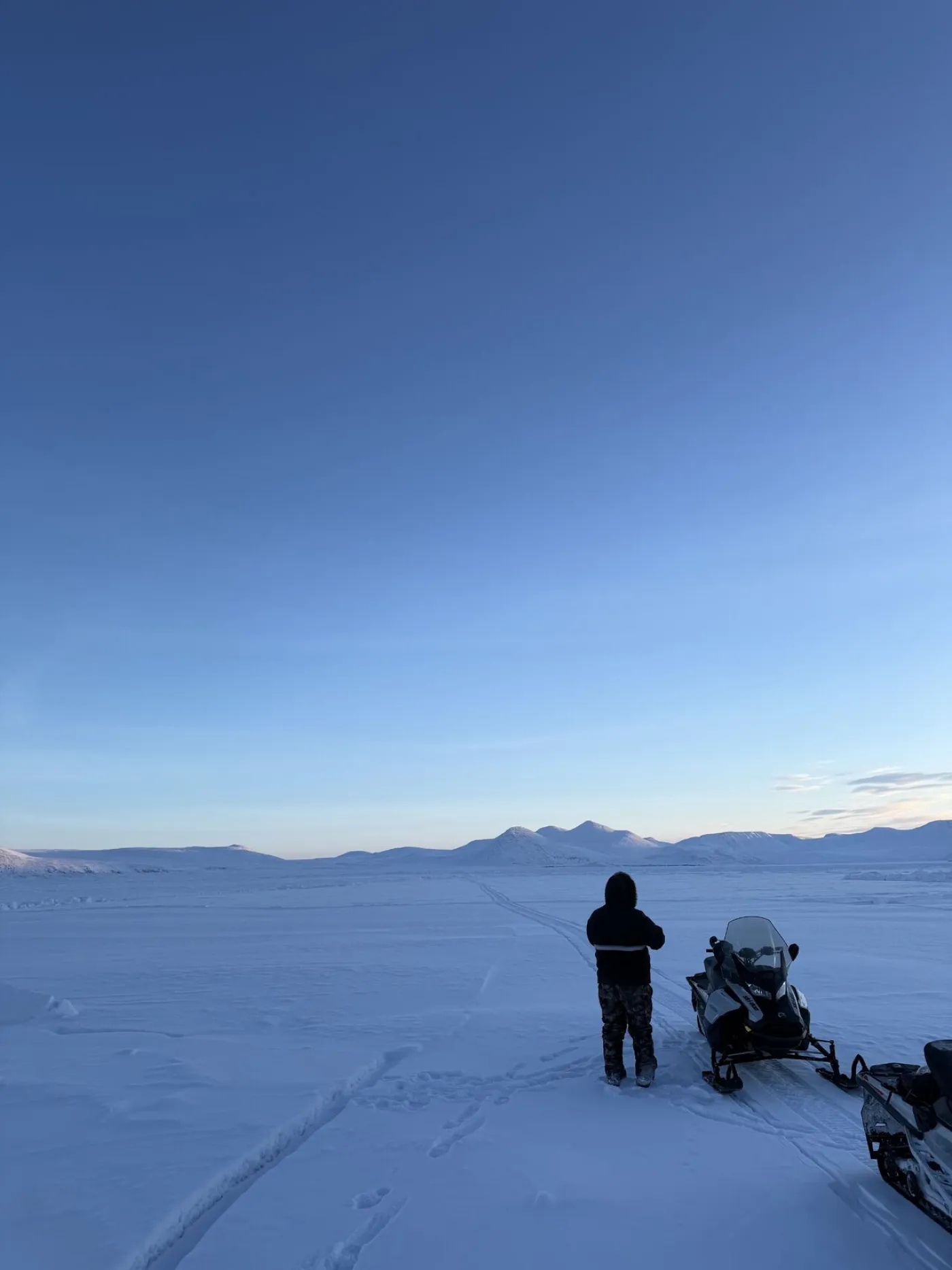
Towards mountains in the distance
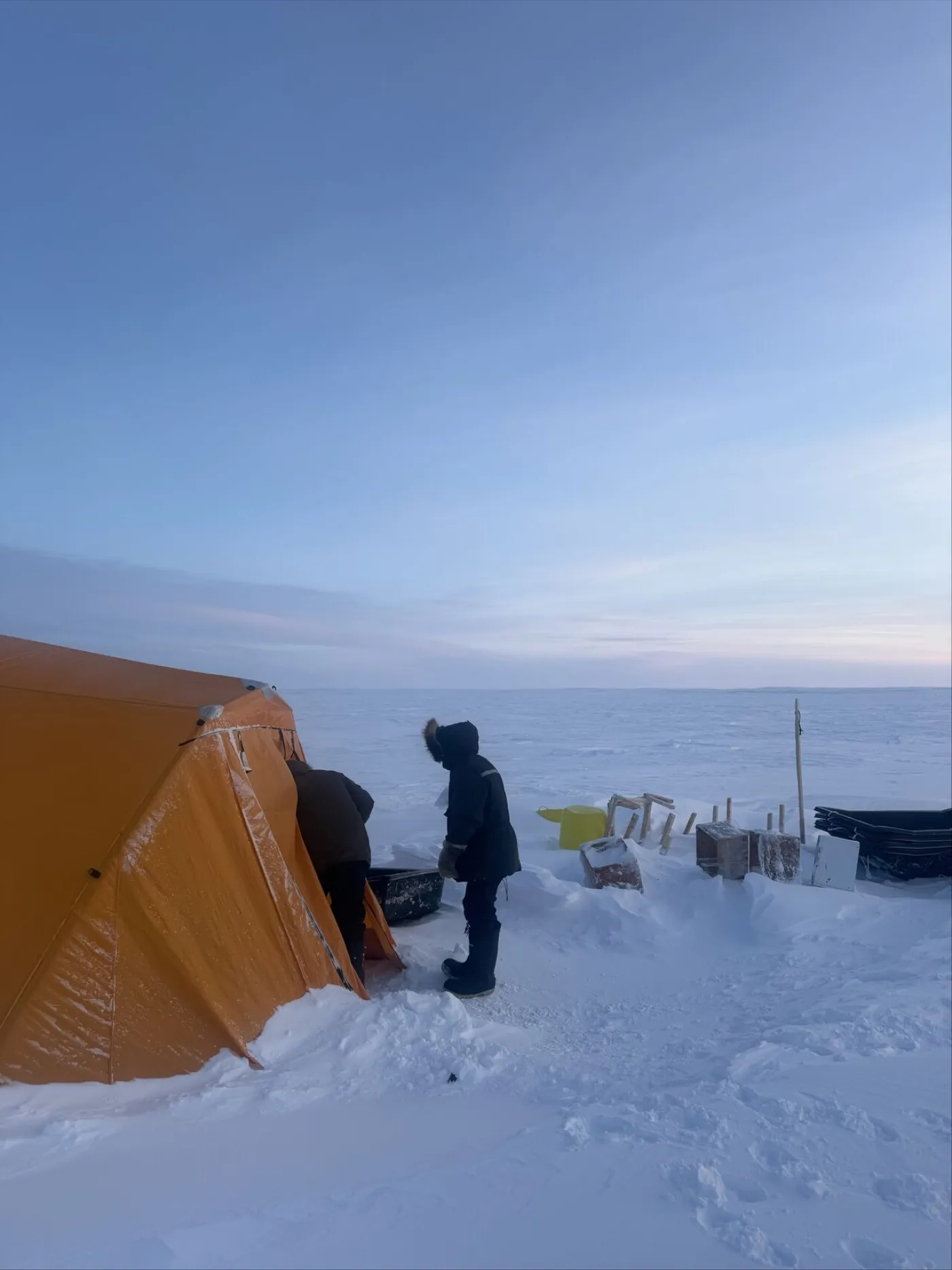
Entering the tent
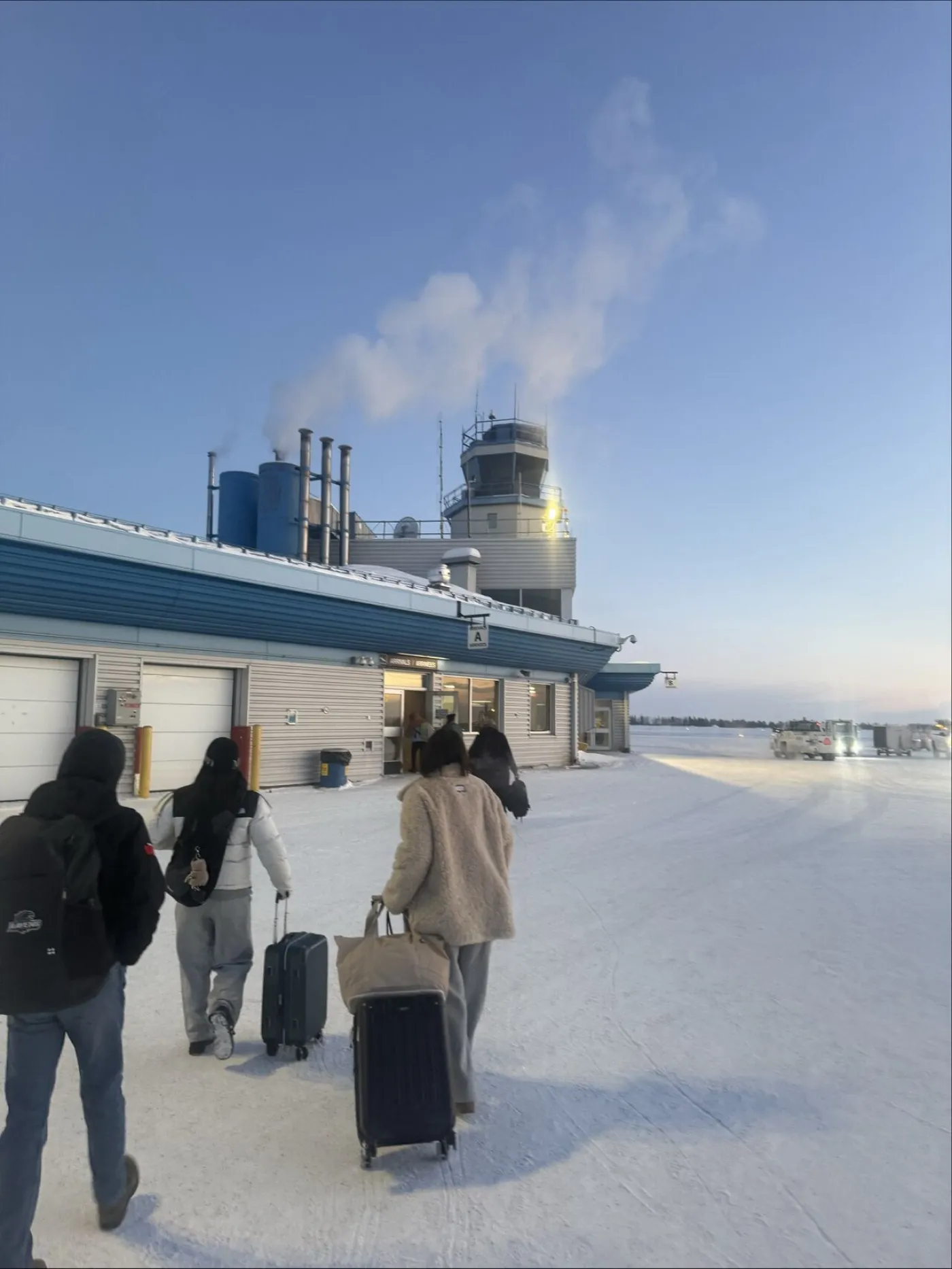
Arriving at the research station
The work after the fieldwork
Faye told us the science doesn’t stop once they leave the ice.
Back at the research centre, the team cleans equipment, processes samples, and carefully melts ice cores for analysis. Evenings are usually spent analysing data or preparing samples before an early night after a long day.
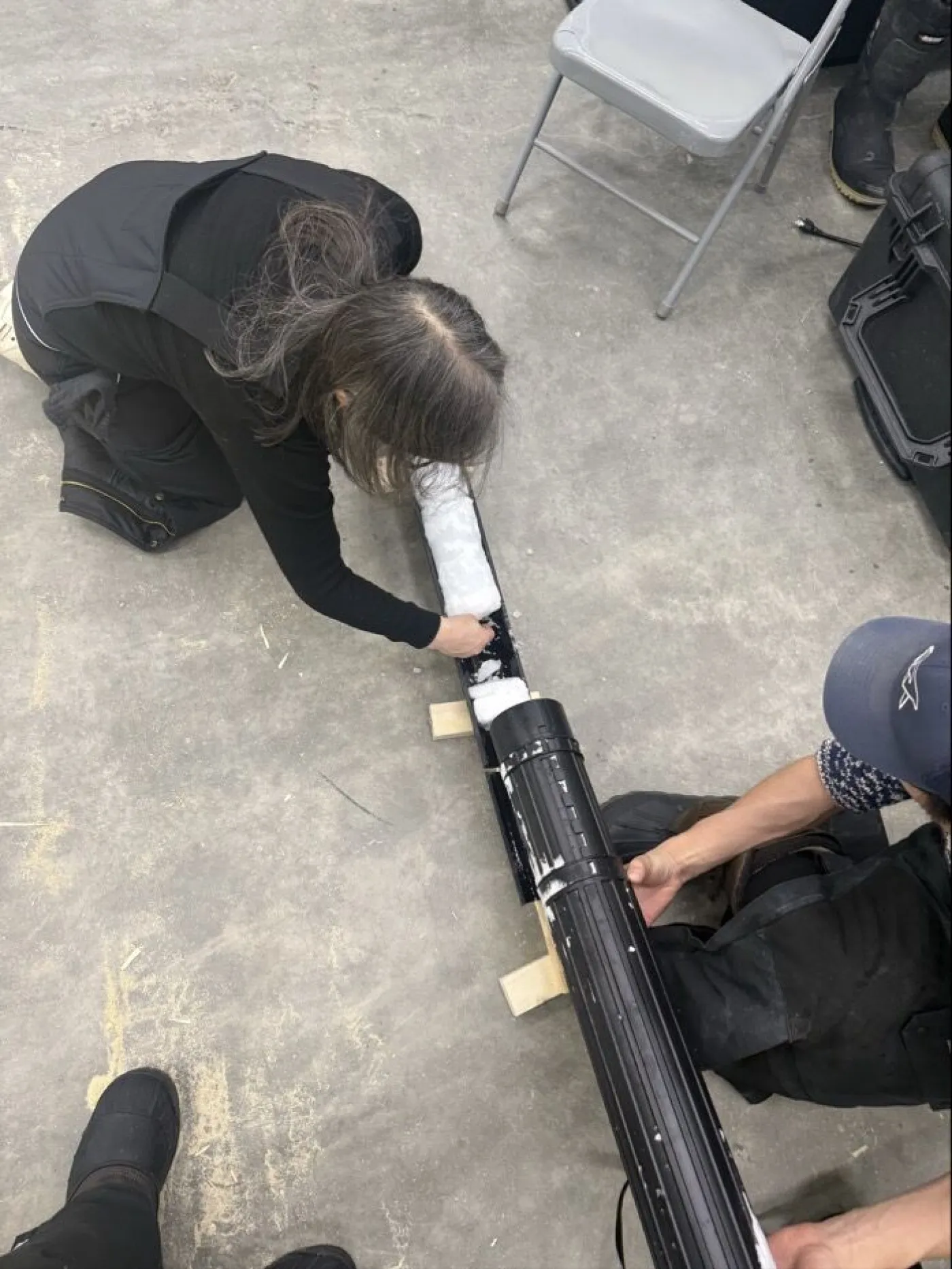
Retrieving the ice core
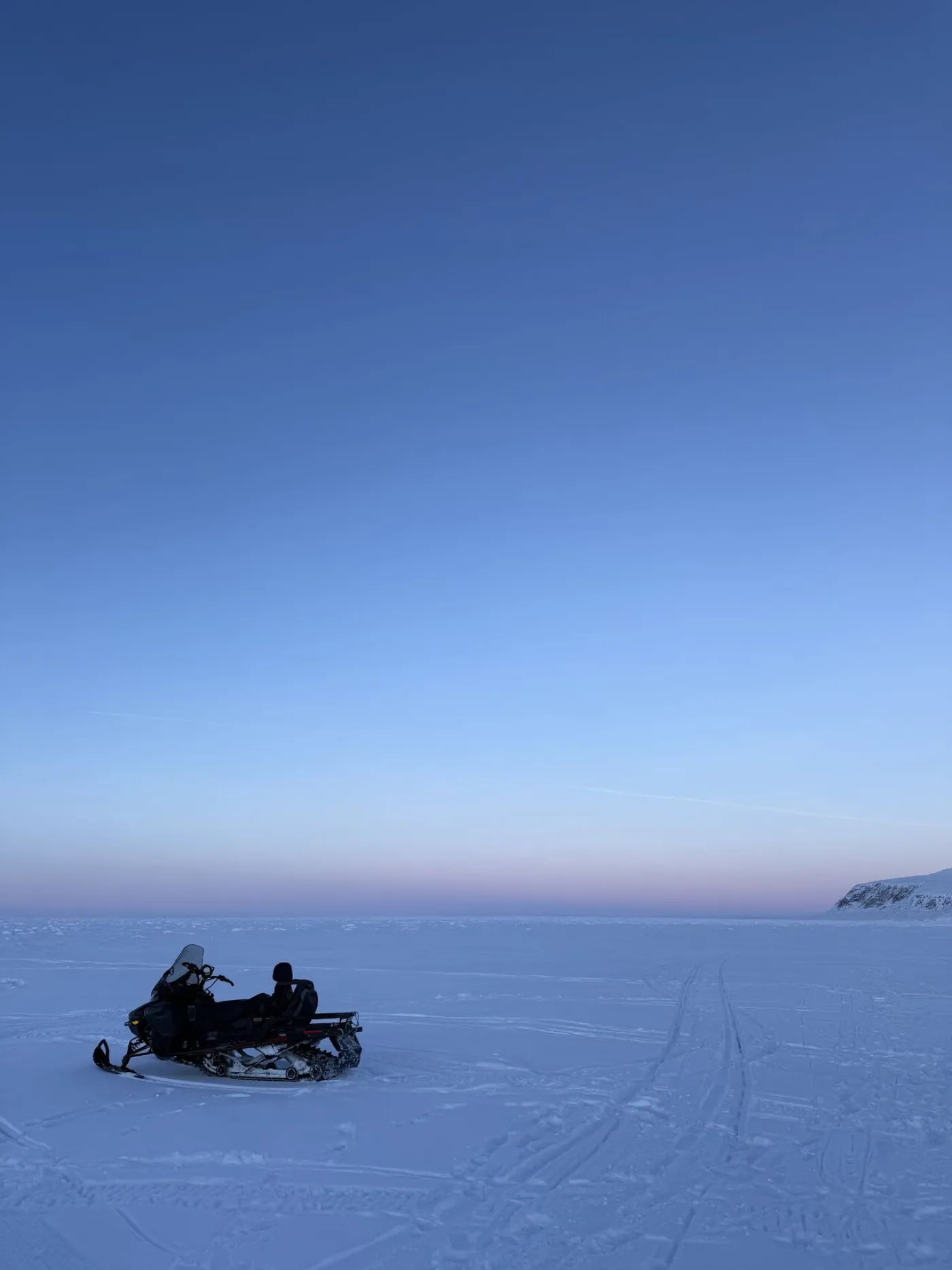
A view over the ice
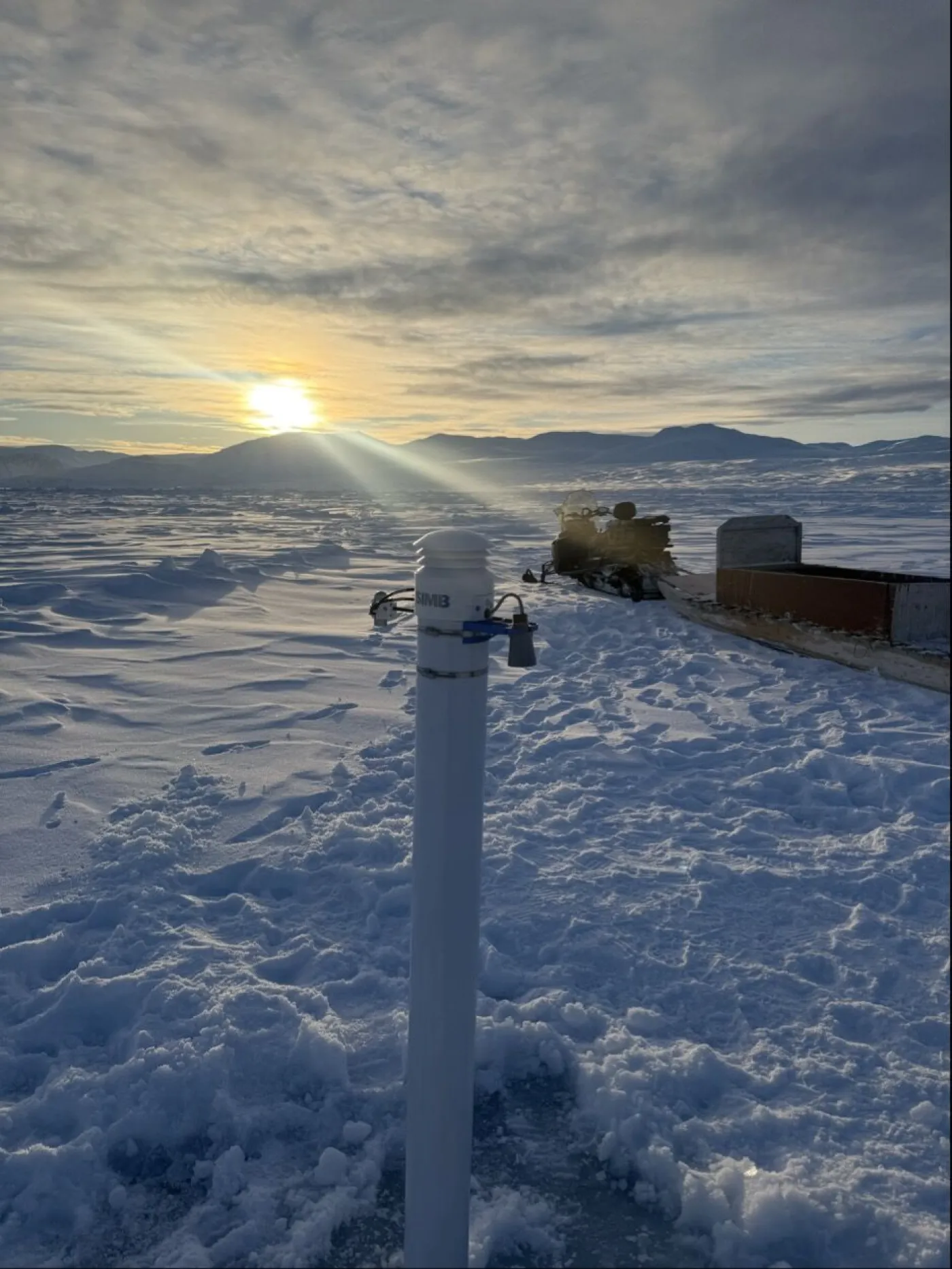
Machinery in the ice
Life beyond the science
Faye told us that living and working in the Arctic is just as memorable outside of research hours.
After long days in the field, the team often cooks together, processes samples, and unwinds before an early night. But sometimes, they step outside to take in the stillness of the Arctic, and if they’re lucky, catch incredible skies, wildlife, or the northern lights.
She said moments like these are a reminder of why protecting polar environments is so important.

Drilling in the ice

Aurora borealis over the station
Closer to home
Faye is a first-year PhD student based in the Department of Earth Sciences, supervised by Professor Ali Mashayek. Her research is centered on sea ice ecology in polar regions, and the effects of varying ice thickness on these ecosystems.
At the Centre for Climate Repair, we are supporting research on sea ice. Arctic sea ice is crucial for regulating global temperatures, but it is melting at an unprecedented rate due to climate change. While reducing emissions is the only way to sustainably preserve the ice long-term, additional localised actions may help to slow the melting and the rate of ice loss. Through field trials and modelling, we are assessing potential approaches to thicken Arctic sea ice - to potentially slow summer melt, reduce Arctic warming, and mitigate further ice loss.